
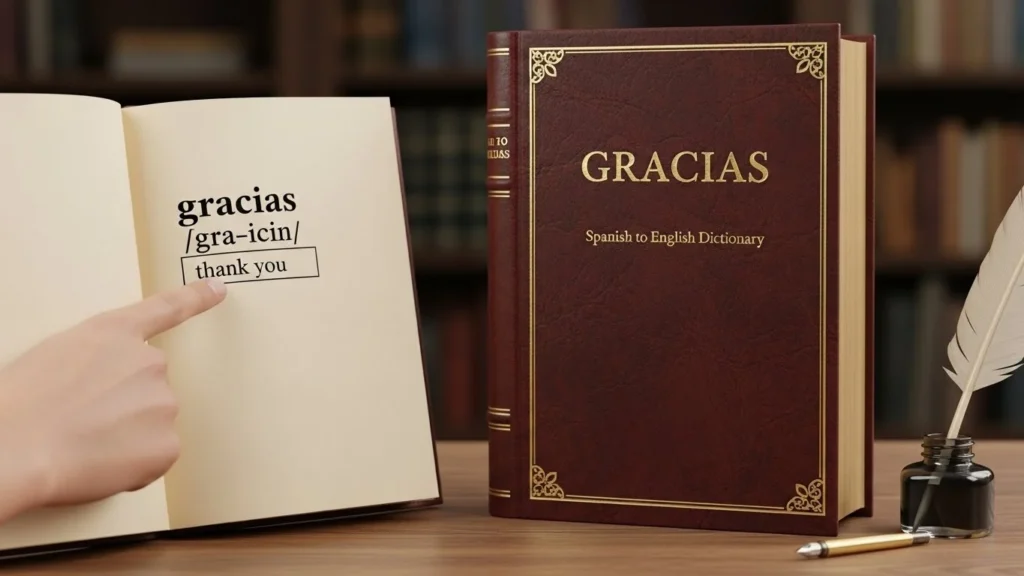
Gracias in Spanish means thank you.
Few Spanish words are as widely recognized and frequently used as gracias. You may have heard it in movies songs travel conversations or everyday life and wondered what does gracias mean in Spanish and why it carries such importance in Spanish speaking cultures.
This comprehensive guide explains the meaning of gracias in Spanish in a clear friendly and professional way. You will learn its definition origin cultural significance real world usage examples tone variations comparisons and practical tips. By the end you will understand not just the word but the feeling behind it.
It is used to express gratitude appreciation or politeness after receiving help kindness or something of value.
Why Gracias Matters in Spanish Language and Culture
Gracias is more than a translation of thank you. It reflects respect manners and cultural warmth.
Understanding gracias helps you
- Communicate politely in Spanish
- Show appreciation naturally
- Build positive relationships
- Avoid sounding rude or distant
What Does Gracias Mean in Spanish
Gracias comes from the idea of grace and gratitude. When someone says gracias they are acknowledging kindness effort or generosity.
It can be used for
- Small favors
- Big acts of help
- Services and hospitality
- Gifts and compliments
- Everyday politeness
Origin of the Word Gracias
Historical Background
The word gracias comes from Latin roots related to grace favor and goodwill. Over time it became part of the Spanish language as a way to express appreciation.
Historically expressing gratitude was closely tied to religious and social values. Saying gracias acknowledged both the action and the kindness behind it.
Why It Became So Popular
- Gratitude is part of daily life
- Politeness is culturally important
- It is simple and versatile
- It fits both formal and informal speech
Today gracias is one of the first Spanish words taught to learners worldwide.
How Gracias Is Used in Everyday Spanish
Gracias is used in nearly all social situations.
Common Situations
- Receiving food or service
- Being helped by someone
- Ending a conversation politely
- Accepting a gift or compliment
- Showing appreciation at work
It can stand alone or be expanded for emphasis.
Labeled Example Table of Gracias Usage
| Situation | Example | Meaning |
|---|---|---|
| Casual help | Gracias | Thanks |
| Polite service | Muchas gracias | Thank you very much |
| Formal setting | Gracias por su ayuda | Thank you for your help |
| Friendly tone | Gracias amigo | Thanks friend |
Real World Examples of Gracias With Tone
Friendly and Warm Example 😊
Gracias for helping me today
This sounds kind relaxed and appreciative.
Neutral Everyday Example
Gracias for the information
Simple polite and appropriate in most situations.
Strong Appreciation Example
Muchísimas gracias
This shows deep gratitude and enthusiasm.
The tone depends on voice facial expression and context.
Variations of Gracias and Their Meanings
Spanish offers many ways to express gratitude using gracias.
Common Variations
- Muchas gracias means thank you very much
- Mil gracias means a thousand thanks
- Muchísimas gracias means extremely thankful
- Gracias a ti means thanks to you
Each variation adds emotional depth.
Gracias Compared With Similar Spanish Words
Understanding gracias becomes clearer when compared with related terms.
Gracias Versus Gracias a Dios
| Phrase | Meaning | Usage |
|---|---|---|
| Gracias | Thank you | To people |
| Gracias a Dios | Thank God | Expressing relief |
Gracias Versus Agradecido
Gracias is spoken gratitude. Agradecido describes a feeling of being grateful.
Alternate Meanings of Gracias
Gracias does not have alternate meanings in Spanish. It consistently means thank you or thanks.
- Soft tone shows politeness
- Enthusiastic tone shows excitement
- Flat tone may sound formal
Cultural Importance of Saying Gracias
In Spanish speaking cultures not saying gracias can feel impolite.
People often say gracias for
- Small gestures
- Everyday interactions
- Routine services
Gratitude is woven into daily communication.
Professional and Polite Alternatives to Gracias
In formal situations longer phrases may be used.
- Le agradezco mucho
- Muchas gracias por su tiempo
- Estoy muy agradecido
These sound respectful and professional.
Common Mistakes Learners Make With Gracias
- Forgetting to say it
- Using it too softly in formal settings
- Overthinking pronunciation
- Thinking it is optional
Saying gracias is always better than not saying it.
Pronunciation Tips for Gracias
Gracias is pronounced with a soft rolling sound depending on accent.
It generally sounds like
Gra see as
Do not stress too hard on the letters. Natural flow matters more.
When Gracias Is Used With Body Language
Spanish speakers often combine gracias with
- A smile
- Eye contact
- A nod
This enhances sincerity and warmth.
Why Gracias Is One of the Most Important Spanish Words
Gracias represents kindness respect and connection.
It is
- Easy to remember
- Universally understood
- Always appropriate
- Emotionally positive
FAQs
What does gracias mean in Spanish
Gracias means thank you and is used to express gratitude and appreciation.
Is it rude not to say gracias
In many situations yes it may be considered impolite.
Does gracias change for gender
No gracias stays the same for everyone.
How do you respond to gracias
Common responses include de nada or con gusto.
Is gracias used in all Spanish speaking countries
Yes gracias is universal across Spanish speaking regions.
Conclusion
Understanding what gracias means in Spanish helps you communicate with warmth respect and confidence.
It is a reflection of culture kindness and human connection.
See Also More :
- What Does Benevolence Mean in the Meaning and Spiritual Significance 2026
- What Makes Food Rich? Complete Taste & Texture Guide (2026)

My name is Lauren Brooks. I work on TextSOrbit.com, where I create informative, well researched, and SEO friendly content. I focus on writing clear and engaging articles that help readers understand topics easily while improving search visibility.