
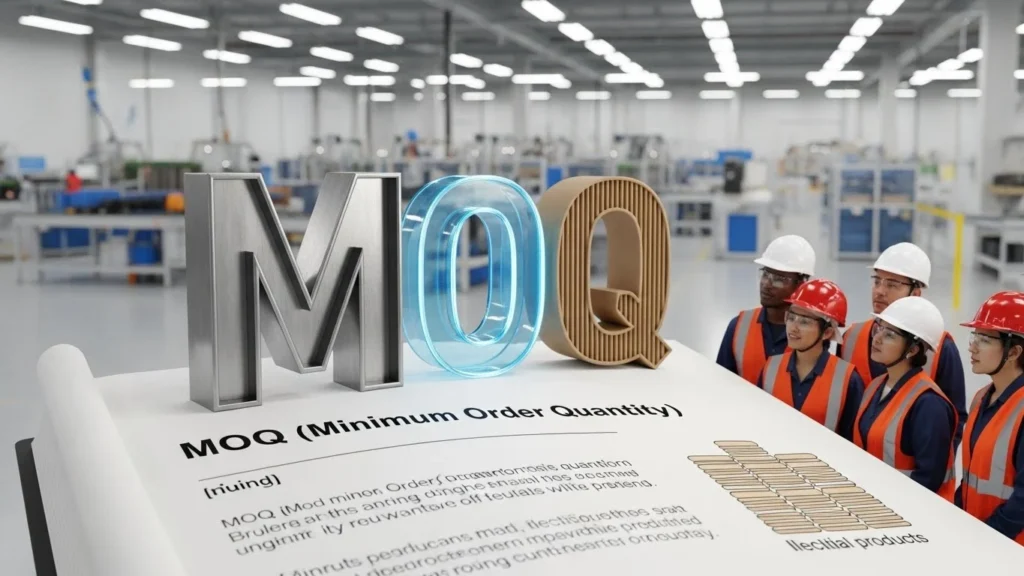
If you’ve ever worked with factories, suppliers, or wholesalers, you’ve probably come across the term MOQ and wondered what it really means — and why it matters so much. For many businesses, especially startups and small brands, MOQ can feel confusing, restrictive, or even frustrating at first.
In this in-depth guide, we’ll clearly explain what MOQ means in manufacturing, why manufacturers use it, how it affects pricing and production, and how buyers can negotiate or manage MOQ smartly. By the end, you’ll understand MOQ from both the manufacturer’s and buyer’s perspective, with real-world examples, comparisons, FAQs, and practical tips.
Definition
MOQ in manufacturing means “Minimum Order Quantity.”
It refers to the smallest number of units a manufacturer is willing to produce or sell in a single order.
Why MOQ Is Important in Manufacturing
MOQ is not just a random number. It plays a critical role in:
- Production efficiency
- Cost control
- Material sourcing
- Pricing strategies
- Supplier–buyer relationships
Understanding MOQ helps businesses avoid surprises, plan budgets better, and choose the right manufacturing partners.
What Does MOQ Mean in Manufacturing?
MOQ (Minimum Order Quantity) is the minimum number of items a manufacturer requires a buyer to order before production can begin or a sale can be approved.
In simple terms:
- Manufacturer sets a minimum limit
- Buyer must meet or exceed it
- Orders below MOQ are usually rejected or priced higher
MOQ exists because manufacturing involves setup costs, labor, materials, and time — even for small batches.
Origin and Background of MOQ
The concept of MOQ evolved with mass production and industrial manufacturing.
How MOQ Started
- Early factories needed large batches to reduce costs
- Machinery setup required time and labor
- Bulk raw materials were cheaper than small quantities
- Logistics favored larger shipments
As global manufacturing expanded, MOQ became a standard business practice across industries.
Why MOQ Is So Common Today
MOQ remains popular because it helps manufacturers:
- Maintain profit margins
- Reduce waste
- Optimize production lines
- Plan inventory efficiently
- Avoid frequent small orders
Even with modern technology, producing very small quantities can still be costly.
How MOQ Works in Real Manufacturing Scenarios
MOQ can vary widely depending on the product, industry, and production method.
Common MOQ Examples
- Clothing factory: 100–500 pieces per design
- Electronics manufacturer: 500–5,000 units
- Packaging supplier: 1,000 boxes
- Custom products: Higher MOQ due to setup costs
Labeled Example Table: MOQ by Industry
| Industry | Typical MOQ | Reason |
|---|---|---|
| Apparel | 100–300 units | Fabric cutting and stitching setup |
| Electronics | 500–5,000 units | Component sourcing and assembly |
| Cosmetics | 1,000 units | Compliance and packaging costs |
| Furniture | 10–50 units | Material and labor intensity |
| Promotional items | 500–2,000 units | Printing and tooling costs |
Real-World MOQ Examples With Context
Friendly Startup Example 😊
A small clothing brand wants to produce custom T-shirts.
The factory says the MOQ is 200 pieces per color.
This ensures fabric sourcing and printing costs are covered.
Neutral Business Example
A company ordering custom boxes is told the MOQ is 1,000 units.
Below that, production costs would exceed profits.
Challenging Buyer Experience 😬
A startup wants only 50 units, but the manufacturer refuses.
The MOQ exists because machine setup costs are too high for small batches.
MOQ and Pricing: How They Are Connected
MOQ directly affects product pricing.
Key Pricing Relationship
- Higher MOQ → Lower cost per unit
- Lower MOQ → Higher cost per unit
This is because fixed costs are spread across more units in larger orders.
MOQ vs Related Manufacturing Terms
MOQ vs Minimum Order Value (MOV)
| Term | Meaning | Focus |
|---|---|---|
| MOQ | Minimum Order Quantity | Number of units |
| MOV | Minimum Order Value | Total order price |
MOQ vs Batch Size
- MOQ: Business requirement
- Batch size: Production capacity
A batch size may be larger than MOQ.
MOQ vs Lead Time
MOQ affects how much you order.
Lead time affects how long it takes.
Alternate Meanings of MOQ
While MOQ almost always means Minimum Order Quantity, in rare cases:
- It may be used internally to indicate minimum inventory levels
- In retail systems, it can relate to reorder thresholds
In manufacturing, however, its meaning is consistent and clear.
Why Manufacturers Set MOQs
Manufacturers set MOQs for several practical reasons:
- Raw material suppliers have their own minimums
- Machine setup takes time and labor
- Quality control costs apply to every run
- Packaging and logistics become inefficient in small quantities
MOQ protects the manufacturer’s business sustainability.
Benefits of MOQ for Buyers
Although MOQ may seem restrictive, it has advantages:
- Lower cost per unit
- Consistent product quality
- Stable supplier relationships
- Better production planning
Buying in bulk often leads to long-term savings.
Challenges of MOQ for Small Businesses
Common issues include:
- High upfront costs
- Inventory storage concerns
- Risk of unsold stock
- Cash flow pressure
This is especially true for startups and test launches.
How to Negotiate MOQ With Manufacturers
Yes, MOQs can sometimes be negotiated.
Practical Negotiation Tips
- Ask for a trial order
- Offer higher unit pricing
- Combine multiple designs into one order
- Build long-term partnership potential
- Use existing molds or materials
Polite, professional communication goes a long way.
Polite and Professional Alternatives to MOQ Language
Instead of blunt demands, suppliers may say:
- Minimum production requirement
- Initial order quantity
- Standard order threshold
- Production minimum
These mean the same thing but sound more formal.
Common Mistakes to Avoid With MOQ
- Ignoring MOQ before requesting quotes
- Assuming all factories have the same MOQ
- Ordering more than you can sell
- Forgetting storage and logistics costs
- Not negotiating at all
Practical Tips for Managing MOQ Successfully
- Start with realistic demand forecasting
- Work with manufacturers offering flexible MOQs
- Use pre-orders to reduce risk
- Consider shared production runs
- Balance cost savings with inventory risk
Conclusion:
MOQ is a fundamental concept in manufacturing that affects cost, production, and supplier relationships. While it may feel limiting at first, it exists for practical and economic reasons.
FAQs
What does MOQ mean in manufacturing?
MOQ means Minimum Order Quantity, the smallest order a manufacturer accepts.
Why do manufacturers require MOQ?
To cover setup, material, labor, and operational costs.
Can MOQ be negotiated?
Sometimes, especially for long-term or high-value buyers.
Is MOQ the same for every product?
No, it varies by product, industry, and production method.
Does higher MOQ mean better pricing?
Yes, unit costs usually decrease with higher MOQs.
Is MOQ common in custom manufacturing?
Yes, custom products usually have higher MOQs.
Can startups work with MOQ?
Yes, by negotiating, choosing low-MOQ suppliers, or starting small.
Does MOQ affect delivery time?
Indirectly. Larger orders may require longer production time.

My name is Lauren Brooks. I work on TextSOrbit.com, where I create informative, well researched, and SEO friendly content. I focus on writing clear and engaging articles that help readers understand topics easily while improving search visibility.