
Quick Answer :
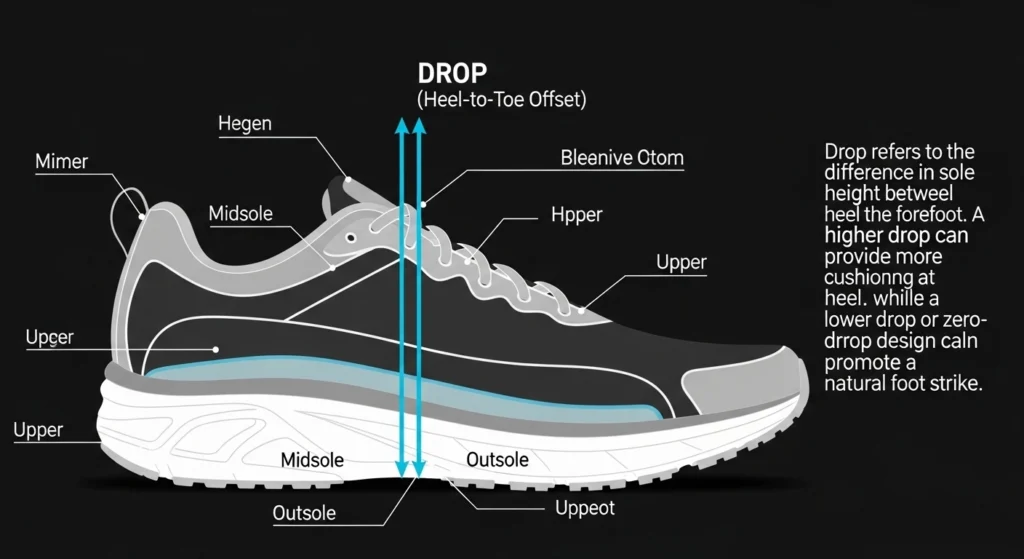
In running shoes, drop means the difference in height between the heel and the forefoot of the shoe. It is measured in millimeters. A higher drop places the heel higher than the toes, while a lower drop keeps the foot closer to flat. Shoe drop affects running form, comfort, impact, and muscle engagement.
When shopping for running shoes, you may notice terms like heel drop, stack height, or zero drop listed in product descriptions. Many runners skip over this detail, yet drop plays a major role in how a shoe feels and performs.
Understanding what drop means in running shoes helps you choose footwear that matches your running style, experience level, and injury history. Whether you are a beginner, a casual jogger, or a long distance runner, knowing shoe drop can improve comfort, efficiency, and overall running enjoyment.
What Does Drop Mean in Running Shoes
Drop refers to the height difference between the heel and the front of the shoe. Shoe brands measure it in millimeters.
For example
A 10 mm drop means the heel sits 10 millimeters higher than the forefoot
A 0 mm drop means the heel and forefoot are level
This measurement directly influences how your foot strikes the ground.
Simple Definition of Shoe Drop
Shoe drop is the vertical difference between heel cushioning and forefoot cushioning in a running shoe.
Origin of the Term Drop
The concept of drop gained popularity as running shoe technology evolved.
Early running shoes had thick heels
Manufacturers added cushioning for shock absorption
Heel drop became a way to describe shoe geometry
Minimalist and barefoot running later brought attention to low and zero drop shoes.
Why Shoe Drop Matters for Runners
Drop affects running mechanics and muscle activation.
It influences
Foot strike pattern
Calf and Achilles load
Ankle movement
Overall posture
Choosing the right drop reduces discomfort and injury risk.
High Drop Running Shoes Explained
High drop shoes usually range from 8 mm to 12 mm.
They
Encourage heel striking
Reduce calf strain
Offer more heel cushioning
Many traditional running shoes fall into this category.
Low Drop Running Shoes Explained
Low drop shoes range from 1 mm to 6 mm.
They
Promote midfoot or forefoot strike
Increase calf engagement
Encourage natural movement
They require gradual adaptation.
Zero Drop Running Shoes Explained
Zero drop shoes have no height difference between heel and forefoot.
They
Mimic barefoot running
Promote natural posture
Increase foot muscle activation
Brands like Altra are known for zero drop designs.
Drop vs Stack Height
Drop and stack height are not the same.
Drop measures height difference
Stack height measures total sole thickness
A shoe can have high cushioning but still be low drop.
How Drop Affects Running Form
Drop influences how your foot lands.
High drop
Heel strike
Shorter Achilles stretch
Low drop
Midfoot strike
Greater calf involvement
Neither is universally better.
Drop and Injury Risk
Incorrect drop choice may contribute to injuries.
High drop risks
Heel dependency
Altered posture
Low drop risks
Calf strain
Achilles soreness
Transition slowly when changing drop levels.
Drop for Beginner Runners
Beginners often benefit from moderate drop shoes.
They offer
Comfort
Stability
Easier adaptation
A range of 8 mm to 10 mm works well for many.
Drop for Experienced Runners
Experienced runners may experiment with lower drop shoes.
They
Improve efficiency
Enhance foot strength
Support natural stride
Experience and conditioning matter.
Drop for Long Distance Running
Long distance runners focus on comfort and fatigue reduction.
Moderate drop
Balanced cushioning
Reduced strain over time
Personal preference plays a big role.
Drop for Trail Running Shoes
Trail shoes vary widely in drop.
Lower drop improves ground feel
Higher drop offers downhill comfort
Terrain influences the ideal drop.
Drop and Heel Striking
High drop shoes support heel strikers by cushioning impact.
This reduces
Joint stress
Immediate discomfort
Many runners naturally heel strike.
Drop and Forefoot Striking
Low drop shoes support forefoot strikers.
They
Encourage natural landing
Increase propulsion
Strong calves are important.
How Brands Label Shoe Drop
Most brands list drop clearly in specifications.
Look for
Heel to toe drop
Heel drop
Offset
Always check product details.
Meaning Table for Shoe Drop
| Drop Type | Measurement | Running Style |
|---|---|---|
| High drop | 8 to 12 mm | Heel strike |
| Moderate drop | 6 to 8 mm | Mixed |
| Low drop | 1 to 5 mm | Midfoot |
| Zero drop | 0 mm | Natural stride |
Common Myths About Shoe Drop
Many runners believe lower drop is always better. This is not true.
The best drop
Depends on comfort
Depends on experience
Depends on injury history
No single drop fits everyone.
How to Choose the Right Drop
Choose based on
Running style
Past injuries
Comfort level
Gradual adaptation
Trying shoes before buying helps.
FAQs
• What does drop mean in running shoes?
Drop means the height difference between the heel and forefoot of a running shoe.
• Is a higher drop better for beginners?
Yes, many beginners feel more comfortable with moderate to high drop shoes.
• Are zero drop shoes good for everyone?
No, they require strong foot muscles and gradual adaptation.
• Can shoe drop cause injuries?
Yes, sudden changes in drop can strain muscles and tendons.
• What drop do professional runners use?
It varies widely based on preference and race distance.
• Is low drop better for natural running?
Low drop encourages a more natural stride but needs adjustment.
• Does drop affect speed?
Drop affects form and comfort, which can influence performance.
• Can I switch drop levels easily?
You should transition slowly to avoid injury.
Conclusion
Shoe drop plays a crucial role in how running shoes feel and perform. It affects foot strike, muscle engagement, comfort, and injury risk. Understanding what drop means in running shoes helps runners make informed choices instead of relying on trends.
There is no perfect drop for everyone. The right choice depends on your running style, experience, and comfort. When selected carefully, the correct shoe drop can improve performance, reduce discomfort, and make running more enjoyable.
See Also More :
- What Do BTC Mean in Text? Complete Meaning, Usage, and Context Explained for 2026
- What Does Hello Kitty Mean in Chinese? Complete Meaning and Cultural Context for 2026

My name is James Anderson. I work on TextSOrbit.com, where I create informative, well researched, and SEO friendly content. I focus on writing clear and engaging articles that help readers understand topics easily while improving search visibilit.