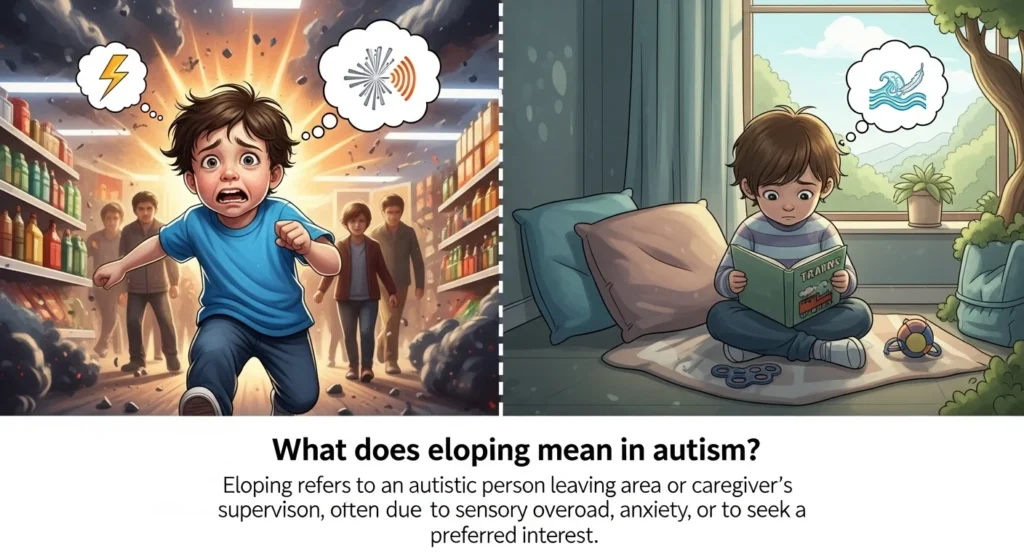
Eloping in autism means when an autistic child or individual leaves a safe area or supervised setting without notice or permission.
It often involves wandering running away or moving toward something of interest without awareness of danger.
The term eloping can be confusing and even alarming when you first hear it in relation to autism. Many parents caregivers teachers and community members ask what does eloping mean in autism and why it is considered such an important safety concern.
This in depth guide explains eloping in autism in a clear friendly and professional way. You will learn its definition causes real world examples emotional tone differences safety risks prevention strategies comparisons with similar behaviors and practical tips. The goal is to help you understand the behavior without fear blame or stigma.
What Does Eloping Mean in Autism
In autism eloping does not mean running away on purpose in a rebellious way. Instead it is usually a behavior driven by communication challenges sensory needs curiosity or stress.
Eloping may look like
- Leaving a classroom suddenly
- Running out of the house
- Wandering away in public places
- Moving toward water roads or familiar locations
The behavior is often unintentional and not meant to cause harm.
Why Eloping Happens in Autism
Eloping is a form of communication or response rather than misbehavior. Many autistic individuals elope because they are trying to meet a need or escape discomfort.
Common Reasons for Eloping
- Difficulty communicating needs
- Sensory overload from noise lights or crowds
- Strong attraction to specific places or objects
- Anxiety or emotional distress
- Desire for movement or exploration
Understanding the reason behind eloping is key to supporting the individual safely.
Origin and Use of the Term Eloping in Autism
The word eloping traditionally meant running away to get married secretly. Over time healthcare and education professionals adopted the term to describe unsupervised leaving behavior in individuals with developmental differences.
In autism related settings eloping is used by
- Therapists
- Educators
- Medical professionals
- Caregivers and safety planners
It helps identify a specific safety related behavior that requires support rather than punishment.
How Common Is Eloping in Autism
Eloping is more common in autistic children than in neurotypical children. Many families experience it at least once especially during early childhood.
Eloping can occur
- At home
- At school
- In stores or public spaces
- During transitions
Because it can happen quickly it is considered a serious safety concern.
Labeled Example Table of Eloping in Autism
| Situation | What Happens | Why It May Occur |
|---|---|---|
| School | Child leaves classroom | Sensory overload |
| Home | Runs out the door | Curiosity or routine |
| Public place | Wanders away | Attraction to object |
| Playground | Moves toward street | Lack of danger awareness |
Real World Examples of Eloping With Context
Neutral Example
The child eloped from the classroom during a loud activity
This describes behavior without judgment.
Concerned Example
He eloped toward the parking lot when overwhelmed
This highlights safety risk and emotional trigger.
Supportive Example 😊
She eloped to a quiet space when the room became stressful
This reframes eloping as a coping attempt.
Tone matters when discussing eloping especially with families.
Is Eloping the Same as Wandering
Eloping and wandering are related but not identical.
Eloping Versus Wandering Comparison
| Eloping | Wandering |
|---|---|
| Sudden leaving | Aimless movement |
| Triggered by need | Often repetitive |
| Immediate safety risk | May be slower |
| Intent to go somewhere | No clear goal |
Both behaviors require understanding and safety planning.
Emotional and Safety Risks of Eloping
Eloping can be dangerous because the individual may not recognize risks.
Potential Dangers
- Traffic
- Water areas
- Strangers
- Weather exposure
- Getting lost
This is why eloping is treated as a safety issue not a discipline problem.
How Eloping Is Different From Typical Running Away
In typical behavior running away may involve planning or defiance. In autism eloping is usually impulsive and need driven.
Key differences include
- Limited danger awareness
- Communication challenges
- Sensory triggers
- No intention to disobey
Recognizing this difference helps create compassionate responses.
Strategies to Reduce Eloping in Autism
Support strategies focus on prevention understanding and communication.
Common Support Approaches
- Teaching functional communication
- Identifying triggers
- Creating predictable routines
- Using visual supports
- Practicing safety skills
Each individual requires a personalized approach.
Environmental Safety Measures
Practical steps can reduce risk.
- Door alarms
- Fencing or locks
- ID bracelets
- Supervision during transitions
- Safe spaces for movement
These measures are protective not restrictive.
Professional and Respectful Language Alternatives
Some families prefer alternatives to the word eloping.
- Unsafe leaving
- Wandering behavior
- Unsupervised movement
Using respectful language supports dignity while addressing safety.
Common Myths About Eloping in Autism
- It means the child is disobedient
- It happens because of bad parenting
- It will go away on its own
- Punishment will stop it
These myths can delay effective support.
How Schools Address Eloping
Schools may use
- Individualized support plans
- Staff training
- Environmental adjustments
- Behavior support strategies
Collaboration between families and schools is essential.
FAQs
What does eloping mean in autism
Eloping in autism means leaving a safe or supervised area without permission or awareness of danger.
Is eloping intentional behavior
Usually no it is driven by unmet needs stress or communication challenges.
At what age does eloping occur
It is most common in young children but can occur at any age.
Is eloping dangerous
Yes it can be a serious safety risk especially near traffic or water.
How is eloping different from misbehavior
Eloping is not defiance it is a response to sensory or emotional needs.
Can eloping be prevented
With understanding supports and safety planning it can often be reduced.
Do all autistic individuals elope
No not everyone with autism experiences eloping behavior.
Should families seek professional help for eloping
Yes professionals can help identify triggers and create safety strategies.
Conclusion
Understanding what eloping means in autism is essential for safety compassion and effective support. Eloping is not a choice made out of defiance but a behavior rooted in communication sensory needs or emotional overwhelm.
With awareness empathy and proper strategies families and communities can help autistic individuals stay safe while respecting their needs and dignity.
See Also More:
- What Does Buongiorno Mean in Italian? Definition, Usage and Examples For 2026
- What Does MOQ Mean in Manufacturing? Definition, Examples And Benefits For 2026

My name is Lauren Brooks. I work on TextSOrbit.com, where I create informative, well researched, and SEO friendly content. I focus on writing clear and engaging articles that help readers understand topics easily while improving search visibility.