
Quick Answer:
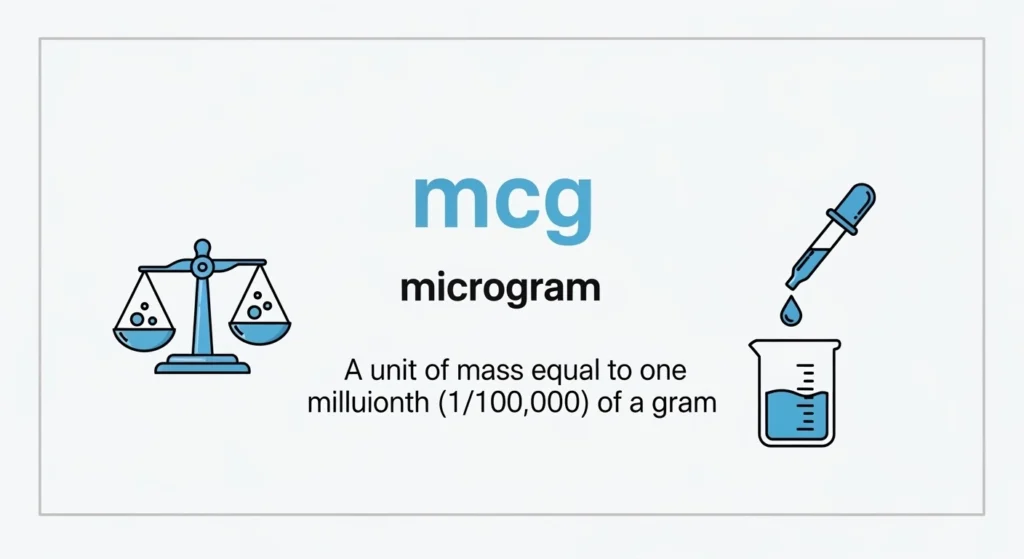
In dosage and medical terms, mcg means microgram. A microgram is a very small unit of weight equal to one millionth of a gram. Doctors and pharmacists use mcg to measure tiny but powerful doses of vitamins, hormones, and medications where precision is extremely important.
When reading a prescription label, vitamin bottle, or medical chart, you may notice the abbreviation mcg written next to a number. For many people, this small unit creates big confusion. Some even mistake mcg for mg, which can lead to serious dosing errors.
Understanding what mcg means in dosage is essential for safe medication use. Many medicines require extremely precise amounts, and even a small mistake can affect how the body responds. Knowing the difference between mcg and other units helps patients follow instructions correctly and avoid health risks. This guide explains mcg in a clear and practical way so you can read dosage information with confidence.
Key Points About mcg in Dosage
Understanding mcg becomes easier when you focus on its core characteristics and why healthcare providers rely on it.
• mcg stands for microgram
• It measures extremely small amounts of a substance
• mcg is smaller than milligrams and grams
• Doctors use mcg for potent medications
• Accurate mcg dosing supports patient safety
What Does mcg Mean in Medical Dosage
mcg represents a microgram, which equals 0.000001 grams. This unit allows healthcare professionals to prescribe medications that work effectively in very small quantities.
Many substances affect the body strongly even at tiny doses, so mcg helps ensure accuracy.
Simple Definition of mcg
A microgram is a unit of weight used to measure very small doses of medicine or nutrients.
Origin of the Term mcg
The term microgram comes from the metric system.
Micro means small
Gram is a base unit of mass
Combined, microgram describes one millionth of a gram
Medical professionals adopted mcg to reduce confusion and dosing errors.
Why Doctors Use mcg Instead of mg
Doctors choose mcg when medications require extreme precision.
Using mg could result in overdose
mcg provides clarity for potent drugs
It prevents decimal point mistakes
It improves patient safety
mcg vs mg in Dosage
Understanding the difference between mcg and mg is critical.
One milligram equals 1,000 micrograms. Confusing the two can cause serious harm.
mcg vs mg Comparison Table
| Unit | Full Form | Size |
|---|---|---|
| mcg | Microgram | Very small |
| mg | Milligram | Larger than mcg |
| g | Gram | Much larger |
Common Medications Measured in mcg
Many medicines and supplements use mcg dosing.
Thyroid medications
Vitamin B12
Vitamin D
Folic acid
Hormones like levothyroxine
mcg in Vitamin Supplements
Vitamins often list dosages in mcg because the body needs them in small amounts.
Vitamin B12 supports nerve health
Vitamin D supports bones
Folate supports cell growth
mcg ensures safe daily intake.
mcg in Prescription Drugs
Prescription medications often rely on mcg for accuracy.
Thyroid drugs require precise balance
Hormonal medications need strict dosing
Heart and blood pressure drugs may use mcg
Why mcg Accuracy Matters
Even slight errors can cause side effects.
Too much can cause toxicity
Too little may reduce effectiveness
Accurate mcg dosing protects health
How to Read mcg on Medicine Labels
Medicine labels clearly show mcg next to the dosage number.
Always read the unit
Do not assume mg
Follow doctor instructions exactly
mcg and Patient Safety
Hospitals emphasize mcg to prevent medication errors.
Clear labeling
Standardized abbreviations
Professional training
All improve patient outcomes.
Common Mistakes With mcg
People sometimes confuse mcg with mg.
Common mistakes include
Ignoring the unit
Assuming higher is better
Misreading handwriting
Always double check.
mcg in Medical Charts
Doctors and nurses use mcg in patient charts to track dosage accurately.
It ensures
Clear communication
Safe adjustments
Consistent treatment
mcg in Pediatric Dosage
Children often receive medication in mcg because their bodies are more sensitive.
Lower body weight
Higher sensitivity
Need for precise dosing
mcg in Hormonal Therapy
Hormones work in tiny amounts.
mcg helps regulate
Thyroid function
Metabolism
Growth and development
When mcg Is Not Used
Some medications require larger doses.
Pain relievers
Antibiotics
Fluids
These usually use mg or grams.
mcg Compared to IU
Some vitamins use IU instead of mcg.
IU measures biological activity
mcg measures weight
Conversion varies by substance
Meaning Table for mcg in Dosage
| Situation | Meaning | Importance |
|---|---|---|
| Prescription | Precise dose | High |
| Vitamins | Safe intake | Moderate |
| Hormones | Potency control | Very high |
| Pediatrics | Child safety | Critical |
When You Should Ask About mcg
Always ask if
You are unsure about dosage
The unit looks confusing
You are switching medications
FAQs
• What does mcg mean in dosage?
mcg means microgram, a very small unit used to measure medication doses.
• Is mcg smaller than mg?
Yes, one mg equals 1,000 mcg.
• Why is mcg used for medicine?
It allows precise dosing for powerful medications.
• Can confusing mcg and mg be dangerous?
Yes, it can lead to overdose or underdose.
• Are vitamins usually measured in mcg?
Many vitamins like B12 and D use mcg.
• Is mcg used worldwide?
Yes, it is part of the international metric system.
• Can I convert mcg to mg easily?
Yes, divide mcg by 1,000 to get mg.
• Should patients double check mcg doses?
Yes, always confirm with a doctor or pharmacist.
Conclusion
mcg plays a critical role in safe and effective medical dosing. It allows doctors to prescribe precise amounts of powerful medications and nutrients that work in tiny quantities. Understanding what mcg means helps patients avoid dangerous mistakes and follow treatment instructions correctly.
By paying attention to dosage units and asking questions when unsure, you protect your health and ensure medications work as intended.
See Also More :
- What Does Drop Mean in Running Shoes? Complete Guide to Heel Drop and Running Performance for 2026
- What Do BTC Mean in Text? Complete Meaning, Usage, and Context Explained for 2026

My name is Lauren Brooks. I work on TextSOrbit.com, where I create informative, well researched, and SEO friendly content. I focus on writing clear and engaging articles that help readers understand topics easily while improving search visibility.