
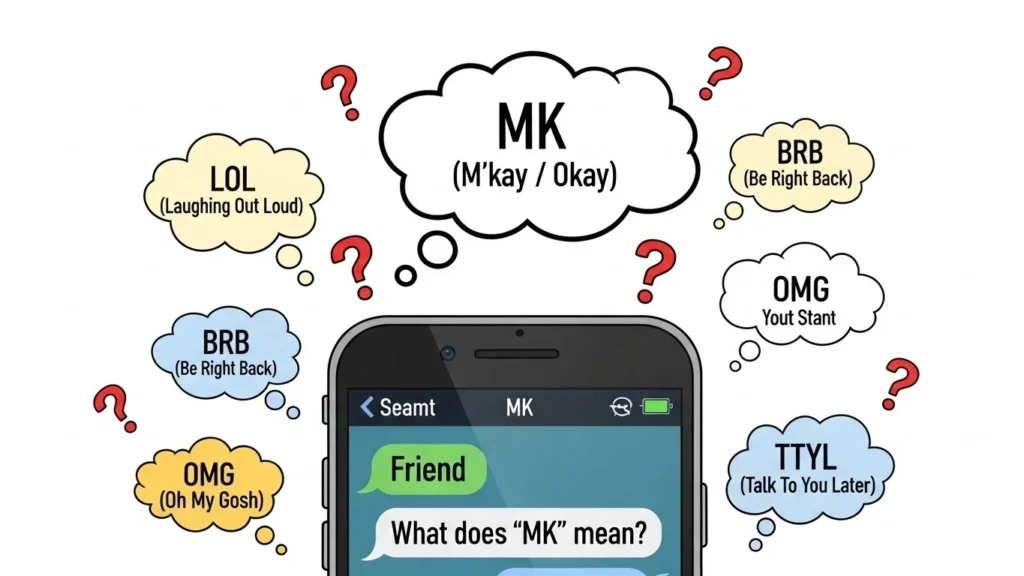
You’ve probably seen “mk” pop up in texts, chats, or social media replies and paused for a second thinking, What does that mean?
It’s short, casual, and everywhere — yet its meaning can change depending on tone, context, and even punctuation.
In this detailed guide, you’ll learn what mk means in a text, how people actually use it in real conversations, whether it’s polite or rude, and how to reply to it naturally. We’ll also explore examples, comparisons, alternate meanings, professional alternatives, and FAQs so you can fully understand this common texting abbreviation.
Definition
MK in a text usually means “okay” or “alright.”
It is an informal, shortened response often used to acknowledge a message, show agreement, or signal that the sender understands what was said.
Why MK Is So Common in Texting
Texting is all about speed and convenience. Over time, people have shortened even short words like “OK” into quicker responses like:
- k
- kk
- mk
MK fits perfectly into fast, casual digital conversations where long replies aren’t necessary.
What Does MK Mean in a Text?
At its core, mk is a casual acknowledgment. It tells the other person:
- I understand
- That’s fine
- Okay, noted
- I agree (sometimes reluctantly)
However, tone matters a lot. Depending on context, mk can sound:
- Neutral
- Friendly
- Dismissive
- Slightly annoyed
Origin and Evolution of MK
Where Did MK Come From?
- MK evolved from “OK”
- The letter M was added for emphasis or habit
- It gained popularity in online chats and SMS
- Common in younger demographics and casual conversations
Unlike slang with deep cultural roots, mk developed naturally through typing shortcuts and informal speech patterns.
Why People Use MK Instead of OK
People choose mk because it feels:
- Faster
- More casual
- Less enthusiastic than OK
- Emotionally neutral
Sometimes, that emotional neutrality is exactly the point.
Common Ways MK Is Used in Texts
Neutral Acknowledgment
Used when someone just wants to confirm they received the message.
Example:
“I’ll call you later.”
“mk”
Slightly Dismissive or Uninterested 😐
When the sender doesn’t want to continue the conversation.
Example:
“Please don’t forget to send the file.”
“mk.”
The period makes it feel colder.
Reluctant Agreement
Used when someone agrees but isn’t thrilled.
Example:
“We’re meeting at 7 instead.”
“mk”
Labeled Example Table: MK in Different Contexts
| Context | Meaning | Tone |
|---|---|---|
| Casual chat | Okay | Neutral |
| Short reply | I understand | Flat |
| With period | Fine, whatever | Dismissive |
| Friendly chat | Alright | Relaxed |
Examples of MK in Real Conversations
Friendly Example 😊
Friend: “Let’s grab coffee tomorrow.”
You: “mk!”
Adding an exclamation point makes it sound positive.
Neutral Example
Boss: “Please review the document.”
You: “mk”
Acknowledges without emotion.
Cold or Dismissive Example ❄️
Partner: “Can we talk later?”
Reply: “mk.”
The period adds distance and finality.
Tone Matters: MK vs MK.
Punctuation changes everything.
- mk → neutral or casual
- mk! → friendly or enthusiastic
- mk. → cold or annoyed
In texting, punctuation often replaces tone of voice.
Is MK Rude?
MK is not inherently rude, but it can feel rude depending on:
- Relationship between people
- Context of the conversation
- Punctuation
- Frequency of use
In professional settings, mk can seem careless or dismissive.
When You Should Avoid Using MK
Avoid mk when:
- Speaking to a boss or client
- Writing professional emails
- Responding to emotional messages
- Clarity or warmth is required
In these cases, a full response is better.
Professional and Polite Alternatives to MK
If you want to sound respectful or clear, use:
- Okay
- Sounds good
- Understood
- Noted
- Sure
These alternatives reduce misunderstanding.
Comparison: MK vs Similar Text Abbreviations
MK vs OK
| Term | Tone | Usage |
|---|---|---|
| OK | Neutral to positive | Universal |
| MK | Casual to flat | Informal texting |
MK vs K
- K is often seen as rude or abrupt
- MK feels slightly softer
MK vs KK
- KK sounds more friendly
- MK sounds more reserved
Alternate Meanings of MK
In texting, mk almost always means okay.
Outside texting, mk can stand for:
- Mark (abbreviation)
- Mortal Kombat (gaming context)
- Manufacturing keyword (industry-specific)
Context always determines meaning.
How to Respond When Someone Texts MK
Your response depends on the vibe.
If It Feels Neutral
Continue the conversation normally.
If It Feels Cold
You may want to clarify or check in.
Example:
“All good?”
If It Feels Friendly
Respond casually and keep it light.
Usage Tips for Natural Texting
- Add emojis if you want warmth
- Avoid periods unless intentional
- Match the other person’s tone
- Use full words if unsure
Conclusion:
MK may look simple, but it carries subtle meaning. It’s a fast way to say okay, but tone, punctuation, and context shape how it’s received.
Frequently Asked Questions
What does mk mean in texting?
It usually means okay or I understand.
Is mk the same as ok?
Yes, but mk is more casual and sometimes flatter in tone.
Is mk rude?
Not always, but it can feel dismissive depending on context.
Why do people say mk instead of ok?
It’s faster and feels more casual.
What does mk. with a period mean?
It often sounds cold, annoyed, or final.
Can mk be used professionally?
It’s best avoided in professional settings.
Is mk slang?
Yes, it’s informal texting slang.
How do I reply to mk?
Respond naturally based on tone or ask for clarification if needed.

My name is Lauren Brooks. I work on TextSOrbit.com, where I create informative, well researched, and SEO friendly content. I focus on writing clear and engaging articles that help readers understand topics easily while improving search visibility.