
Quick Answer
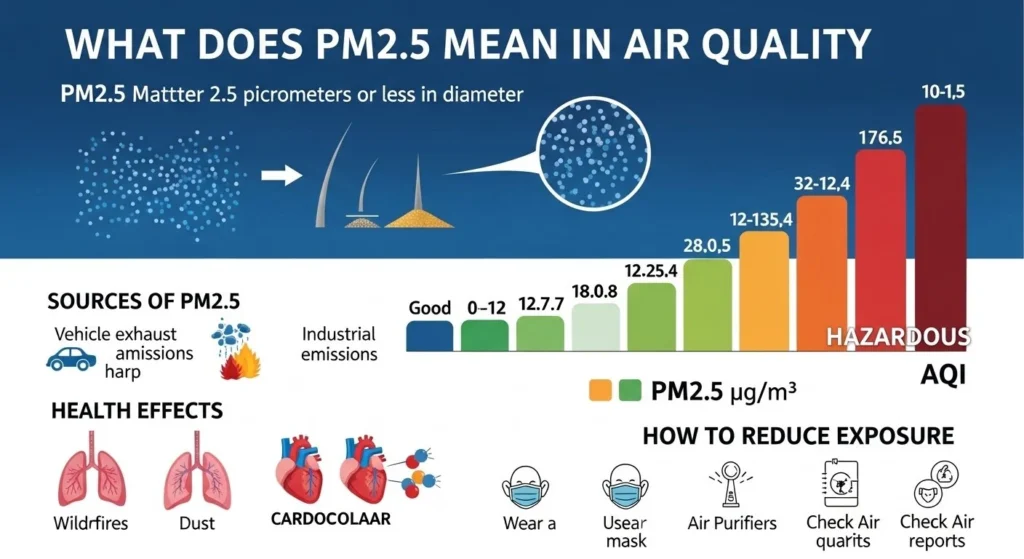
PM2.5 refers to fine particulate matter in the air that is 2.5 micrometers or smaller in diameter. These microscopic particles are harmful because they can be inhaled deep into the lungs and even enter the bloodstream, increasing the risk of breathing problems, heart disease, and other serious health conditions.
Air quality reports often highlight PM2.5 levels during pollution events, smog, or wildfires. Understanding PM2.5 helps people make safer choices for daily life and health.
What Is PM2.5 in Air Quality
PM2.5 stands for particulate matter that measures 2.5 microns or less in size. These particles are so small that they remain suspended in the air for long periods and can travel long distances.
Because of their tiny size, PM2.5 particles are more dangerous than larger pollutants.
Simple Meaning of PM2.5
PM2.5 means very small air pollution particles that can reach deep into the lungs and cause health damage.
Why PM2.5 Is Harmful
PM2.5 particles bypass the body’s natural filters like the nose and throat. Once inhaled, they can lodge in lung tissue or enter the bloodstream.
This exposure can trigger inflammation and long term health problems.
Main Sources of PM2.5
PM2.5 comes from both natural and human activities.
Common sources include:
Vehicle emissions
Industrial pollution
Power plants
Wildfires
Wood burning
Construction dust
Cooking smoke
Cities often experience higher PM2.5 levels due to traffic and industry.
PM2.5 vs PM10
PM10 particles are larger and usually affect the nose and throat. PM2.5 particles are smaller and more dangerous because they penetrate deeper into the lungs.
PM2.5 poses a higher risk to long term health.
How PM2.5 Is Measured
PM2.5 is measured in micrograms per cubic meter of air (µg/m³) using air monitoring systems.
These measurements help determine pollution levels and health risks.
PM2.5 and Air Quality Index
PM2.5 is a key factor in calculating the Air Quality Index (AQI).
Higher PM2.5 levels lead to worse AQI ratings, such as unhealthy or hazardous air conditions.
PM2.5 AQI Levels
| AQI Range | PM2.5 Level | Air Quality |
|---|---|---|
| 0–50 | 0–12 | Good |
| 51–100 | 12.1–35.4 | Moderate |
| 101–150 | 35.5–55.4 | Unhealthy for sensitive groups |
| 151–200 | 55.5–150.4 | Unhealthy |
| 201–300 | 150.5–250.4 | Very unhealthy |
| 301+ | 250.5+ | Hazardous |
Health Effects of PM2.5
Short term exposure may cause:
Coughing
Eye irritation
Shortness of breath
Chest discomfort
Long term exposure increases the risk of heart and lung disease.
PM2.5 and Lung Health
PM2.5 particles irritate lung tissue and worsen conditions such as asthma and bronchitis.
Children and older adults are especially vulnerable.
PM2.5 and Heart Health
Once in the bloodstream, PM2.5 increases the risk of heart attacks, strokes, and high blood pressure.
PM2.5 and Children
Children inhale more air relative to their body size, making them more sensitive to air pollution and lung damage.
PM2.5 and Older People
Older adults face increased hospital visits and complications due to PM2.5 exposure.
PM2.5 and Pregnancy
Exposure during pregnancy may lead to low birth weight and premature delivery.
Environmental Impact of PM2.5
PM2.5 contributes to smog, reduced visibility, and ecosystem damage. It also interacts with climate change effects.
Indoor vs Outdoor PM2.5
They include cooking, smoking, candles, and poor ventilation. Indoor air can sometimes be more polluted than outdoor air.
How to Reduce PM2.5 Exposure
Check air quality reports
Limit outdoor activity on polluted days
Use air purifiers
Wear protective masks
Avoid heavy exercise during high pollution
Masks That Protect Against PM2.5
N95 and KN95 masks are effective at filtering PM2.5 particles when worn properly.
PM2.5 and Air Purifiers
HEPA filter air purifiers can significantly reduce indoor PM2.5 levels.
Seasonal Changes in PM2.5
Levels often rise in winter due to heating emissions and during wildfire seasons.
PM2.5 and Climate Change
Climate change increases wildfires and dust storms, raising PM2.5 concentrations worldwide.
PM2.5 Alerts
Air quality alerts warn people when PM2.5 levels become unsafe.
Common Misunderstandings
PM2.5 is often invisible but still dangerous. Clean looking air does not always mean safe air.
Who Is Most at Risk
Children
Older adults
Pregnant individuals
Asthma patients
Heart disease patients
FAQs
What does PM2.5 stand for?
Particulate matter smaller than 2.5 micrometers.
Is PM2.5 visible?
No, it is usually invisible.
What PM2.5 level is unhealthy?
Above 35 µg/m³ can be harmful.
Can PM2.5 cause long term damage?
Yes, especially to lungs and heart.
Does rain reduce PM2.5?
Rain can temporarily reduce pollution levels.
Conclusion
PM2.5 is a critical air quality indicator that directly affects human health. Though invisible, these fine particles can cause serious lung and heart problems with long term exposure.
Understanding PM2.5 levels and taking preventive steps helps reduce health risks and supports safer living in polluted environments.
See Also More:
- What Does Carat Mean in Gold? Complete Meaning Purity Levels and Buying Guide
- What Does Chelated Mean in Vitamins? Complete Meaning and Health Context for 2026

My name is James Anderson. I work on TextSOrbit.com, where I create informative, well researched, and SEO friendly content. I focus on writing clear and engaging articles that help readers understand topics easily while improving search visibilit.