
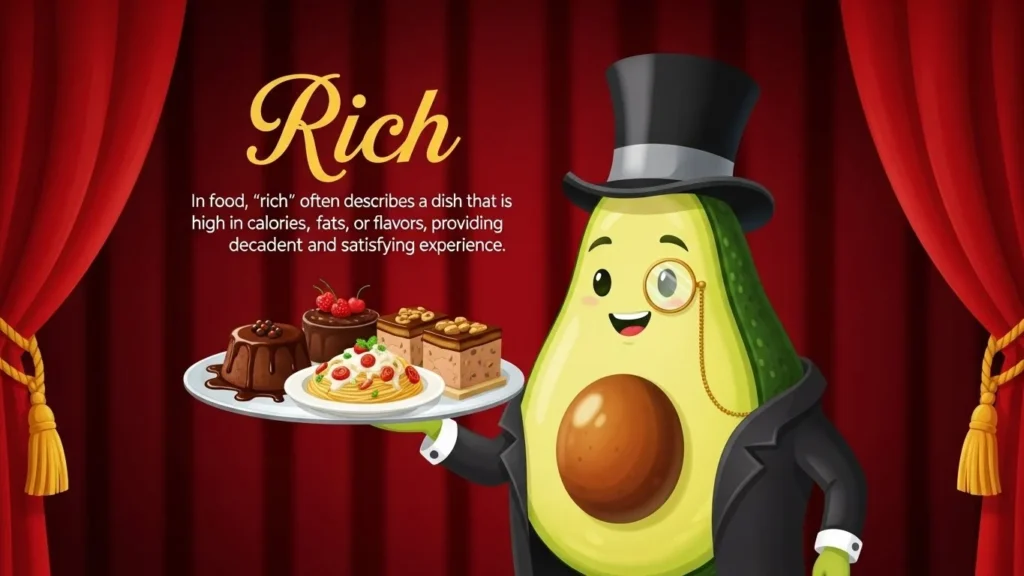
In food, “rich” means a flavor or texture that is intense, full-bodied, and indulgent, usually because of high amounts of fat, sugar, cream, butter, eggs, or deeply developed seasonings. Rich foods feel satisfying and luxurious, but they can also feel heavy if eaten in large portions.
Have you ever taken a bite of chocolate cake and instantly thought, “Wow, this is really rich”?
Or heard someone say they can only eat a small portion because the food is too rich?
In cooking and everyday conversation, “rich” is one of the most common food descriptions. Yet many people are unsure what it truly means. It does not describe price, spice level, or presentation. Instead, it explains how food tastes, feels, and satisfies you.
This article explains what rich means in food, where the term comes from, how it is used in real life, and how it compares to similar food descriptions. By the end, you will understand the word clearly and be able to use it confidently when talking or writing about food.
What Does “Rich” Mean in Food?
When food is described as rich, it usually means:
- The flavor is deep and intense
- The texture is creamy, dense, or buttery
- The ingredients are high in fat, sugar, or both
- The dish feels filling and indulgent
In simple terms, rich food is food that feels luxurious and satisfying rather than light or refreshing.
Origin of the Word “Rich” in Food
The word rich comes from Old French riche, meaning abundant or plentiful. Its earlier roots described strength, fullness, or power.
As cooking traditions developed, especially in European cuisine, foods made with butter, cream, eggs, sugar, and meat fats were considered abundant and luxurious. Over time, the word rich became associated with food that had full flavor, density, and indulgence.
Today, the word is widely used in both home cooking and professional food writing.
How “Rich” Is Used in Real Life
The term rich is commonly used by:
- Home cooks
- Chefs and bakers
- Food reviewers
- Restaurant menus
- Everyday diners
It appears frequently when describing desserts, sauces, dairy products, and slow-cooked dishes.
Examples of “Rich” in Food (With Tone and Context)
Friendly or Positive Tone
Used when praising food.
- “This chocolate mousse is so rich and creamy.”
- “I love rich pasta sauces with lots of cheese.”
- “That curry has a rich, comforting flavor.”
Meaning: The food is delicious, indulgent, and satisfying.
Neutral or Descriptive Tone
Used in recipes or reviews.
- “The dish has a rich, buttery taste.”
- “Serve smaller portions because the soup is rich.”
- “This dessert is rich due to the cream and eggs.”
Meaning: A factual description of taste and texture.
Negative or Dismissive Tone
Used when food feels too heavy.
- “It tastes good, but it is too rich for me.”
- “I could not finish it because it was overly rich.”
- “The sauce is so rich it overpowers the dish.”
Meaning: The food feels overwhelming or heavy.
What Makes Food Rich?
Several elements contribute to richness in food.
High Fat Content
Fat carries flavor and creates a smooth, satisfying mouthfeel.
Examples include butter, cream, cheese, oil, and animal fats.
Sugar and Sweetness
In desserts, sugar intensifies richness.
Examples include chocolate, caramel, custards, and frosting.
Dense Texture
Rich foods are usually thick, creamy, or heavy rather than airy.
Examples include cheesecake, brownies, and cream-based sauces.
Developed or Complex Flavors
Slow cooking and reduction deepen flavor.
Examples include stews, curries, and long-simmered sauces.
Example Table: Rich Foods vs Light Foods
| Food Item | Rich or Not | Reason |
|---|---|---|
| Cheesecake | Rich | High fat, sugar, dense texture |
| Alfredo pasta | Rich | Cream, butter, cheese |
| Grilled chicken breast | Not rich | Lean protein, low fat |
| Fruit salad | Not rich | Fresh, light, low calorie |
| Chocolate brownie | Rich | Butter, sugar, cocoa |
| Clear vegetable soup | Not rich | Water-based and light |
Rich vs Similar Food Descriptions
| Term | Meaning | Difference from Rich |
|---|---|---|
| Creamy | Smooth texture | Creamy can be light, rich is heavier |
| Heavy | Filling or dense | Heavy may lack flavor |
| Decadent | Luxurious and indulgent | More emotional than descriptive |
| Flavorful | Strong taste | Flavorful does not always mean fatty |
| Savory | Salty or umami | Savory foods can be light or rich |
Is “Rich” Always a Compliment?
No. The word rich can be positive or negative depending on context.
Rich food is usually appreciated in small portions. When it lacks balance, it can feel greasy, overwhelming, or tiring to eat.
Chefs often balance rich dishes with acidity, herbs, or lighter side dishes to prevent the food from feeling too heavy.
Alternate Meanings of “Rich”
Outside of food, the word rich can also mean:
- Wealthy or financially successful
- Abundant, such as rich soil
- Intense, such as rich colors or sound
- Detailed, such as rich culture or history
In food, however, rich only refers to taste, texture, and indulgence, not cost.
Polite and Professional Alternatives to “Rich”
When writing menus, reviews, or articles, you can replace or support the word rich with:
- Indulgent
- Full-bodied
- Luxurious
- Deeply flavored
- Cream-forward
- Decadent
- Well-balanced
Example:
Instead of saying, “The dish is very rich,”
you can say, “The dish has a full-bodied, indulgent flavor.”
Usage Tips for Describing Rich Food
- Explain why the food is rich
- Combine richness with balance words like smooth or well-rounded
- Avoid repeating the word too often
- Mention portion size when richness is intense
Conclusion
In food, rich describes dishes that are full-flavored, indulgent, and deeply satisfying. The term is closely linked to fat, sugar, texture, and complexity rather than price or appearance.
- Describe food more accurately
- Understand menus and reviews better
- Balance meals more effectively
The next time someone calls a dish rich, you will know exactly what they mean and why.
FAQs
What does rich mean when describing food?
It means the food has intense flavor, creamy or dense texture, and feels indulgent and filling.
Is rich food unhealthy?
Not necessarily, but rich foods are often high in calories, so moderation is important.
Can savory food be rich?
Yes. Many savory dishes like curries, stews, and cheese sauces are rich.
Why do people say food is too rich?
Because it feels heavy or overwhelming after a few bites.
Is rich the same as creamy?
No. Creamy describes texture, while rich describes overall flavor and heaviness.
What are examples of rich desserts?
Cheesecake, brownies, chocolate mousse, custards, and fudge.
How do chefs balance rich food?
By adding acidity, fresh herbs, vegetables, or lighter sides.
Is rich food always expensive?
No. Many homemade dishes can be rich without being costly.
See More Related Articles:
- What Does Intuitive Mean in Personality? Full Guide (2026)
- What Does the Devil Mean in Tarot? A Complete Beginner’s Guide (2026)

My name is Ava Mitchell. I work on TextSOrbit.com, where I create informative, well-researched, and SEO friendly content. I focus on writing clear and engaging articles that help readers understand topics easily while improving search visibility