
Quick Answer:
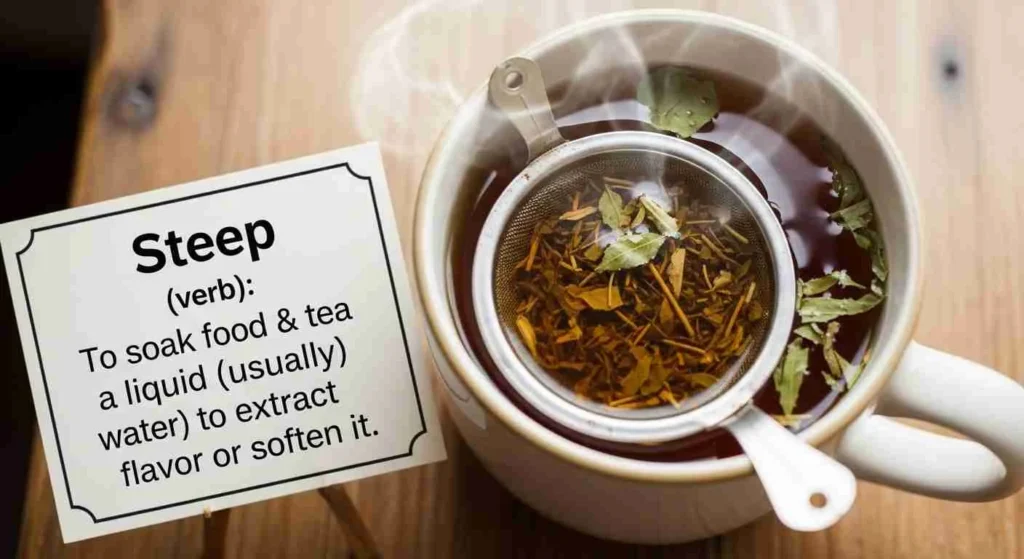
In cooking, steep means to soak an ingredient in liquid for a period of time so that its flavor, color, aroma, or nutrients slowly transfer into the liquid. Steeping is commonly used with tea, herbs, spices, coffee, fruits, and broths, and it usually involves gentle heat or room-temperature resting rather than boiling.
You have probably seen the word steep in a recipe and wondered what exactly it means. Should the liquid be hot or cold? How long should you wait? And is steeping the same as boiling or simmering?
These questions are very common, especially for beginner cooks. Steeping sounds simple, but doing it correctly can make a big difference in flavor and texture.
Understanding what steep means in cooking helps you follow recipes accurately and avoid bitter, weak, or unbalanced results.
What Does Steep Mean in Cooking?
In cooking terms, to steep means to let ingredients sit in a liquid so their flavors slowly release over time. The process is gentle and controlled, focusing on extraction rather than cooking the ingredient fully.
Unlike boiling, steeping does not aggressively heat the ingredients. Instead, it allows subtle flavors to develop naturally.
Simple explanation:
Steeping equals soaking ingredients to pull out flavor.
Example sentence:
Let the tea leaves steep for five minutes before serving.
Literal Meaning vs Culinary Meaning of Steep
Literally, the word steep means to soak or immerse something in liquid. In cooking, the meaning stays very close to this definition but with a culinary purpose.
The goal of steeping in cooking is flavor extraction, not texture change or full cooking. This is why steeping is often paired with gentle heat or rest time.
Understanding this difference helps avoid common mistakes like overcooking herbs or burning spices.
Why Steeping Is Important in Cooking
Steeping plays a key role in many recipes because it allows flavors to develop without harsh heat.
Benefits of steeping include:
Better flavor control
Smoother taste without bitterness
Preservation of delicate aromas
Even infusion of ingredients
Steeping is especially important for ingredients that lose flavor quickly when boiled.
Common Ingredients That Are Steeped
Many everyday ingredients are steeped during cooking or preparation.
Common examples include:
Tea leaves and tea bags
Fresh or dried herbs
Whole spices
Coffee grounds
Citrus peels
Dried fruits
Vanilla pods
Each ingredient requires a different steeping time and temperature.
Steeping vs Boiling in Cooking
Steeping and boiling are often confused, but they are very different techniques.
Steeping uses gentle heat or no heat
Boiling uses high heat and rapid bubbles
Steeping preserves delicate flavors
Boiling extracts faster but can cause bitterness
Choosing the right method depends on the ingredient and desired outcome.
Steeping vs Simmering and Infusing
Steeping is closely related to simmering and infusing, but they are not the same.
Simmering involves low heat with gentle bubbling
Infusing often uses heat and fat like oil or milk
Steeping focuses on soaking and resting
Each technique serves a specific purpose in cooking.
How Temperature Affects Steeping
Temperature plays a major role in steeping.
Hot steeping works faster and is common for tea and herbs
Cold steeping takes longer but produces smoother flavors
Warm steeping balances speed and delicacy
Using the wrong temperature can result in weak or bitter flavors.
How Long Should You Steep Ingredients?
Steeping time depends on the ingredient and liquid.
Tea leaves may steep for two to five minutes
Herbs may steep for ten to thirty minutes
Spices may steep for one hour or longer
Cold steeping can take several hours or overnight
Always follow recipe instructions for best results.
Examples of Steeping in Cooking
Here are realistic cooking examples.
Steep tea leaves in hot water before drinking
Steep herbs in broth to flavor soups
Steep spices in milk for desserts
Steep citrus peels in syrup for sauces
Each example shows how steeping builds flavor gradually.
When Steeping Can Go Wrong
Steeping is simple, but mistakes can happen.
Oversteeping can cause bitterness
Understeeping can lead to weak flavor
Using boiling liquid can damage delicate ingredients
Ignoring timing can ruin balance
Paying attention to time and temperature prevents these issues.
Meaning Table for Steep in Cooking
| Situation | What Steep Means | Purpose |
|---|---|---|
| Tea making | Soaking leaves in hot water | Extract flavor |
| Herbal cooking | Letting herbs rest in liquid | Gentle infusion |
| Spices in milk | Allowing spices to flavor dairy | Aroma release |
| Cold brew | Soaking coffee in cold water | Smooth taste |
Similar Cooking Terms and Alternatives
Some cooking terms are closely related to steep.
| Term | Meaning | Difference |
|---|---|---|
| Infuse | Flavor liquid with ingredients | Often uses heat |
| Simmer | Cook gently below boiling | Active heat |
| Boil | Cook at high heat | Strong extraction |
| Marinate | Soak food for flavor | Used for solids |
Knowing these differences improves cooking accuracy.
Common Mistakes Beginners Make When Steeping
Many beginners struggle with steeping at first.
Using boiling water for delicate herbs
Steeping too long
Ignoring recipe instructions
Stirring too aggressively
Avoiding these mistakes leads to better results.
FAQs
What does steep mean in cooking?
It means soaking ingredients in liquid to extract flavor slowly.
Is steeping the same as boiling?
No, steeping uses gentle heat or resting, not high heat.
Can you steep ingredients in cold water?
Yes, cold steeping is common for coffee and tea.
How long should I steep herbs?
Usually ten to thirty minutes, depending on strength.
Does steeping cook the ingredient?
No, it mainly extracts flavor rather than cooking.
Why does oversteeping taste bitter?
Too much extraction releases harsh compounds.
Is steeping necessary in recipes?
Yes, skipping it can reduce flavor quality.
Can steeping be done overnight?
Yes, especially in cold steeping methods.
Conclusion
In cooking, steeping is a gentle technique that allows flavors to develop naturally by soaking ingredients in liquid over time. It is commonly used for tea, herbs, spices, and coffee, and it plays an important role in achieving balanced taste.
Understanding how steeping works, including timing and temperature, helps you follow recipes more accurately and avoid common mistakes. When done correctly, steeping adds depth and richness without overpowering flavors.
See Also More :
- What Does Yama Mean in Japanese? Complete Meaning and Cultural Context for 2026
- What Does NTC Mean in Spanish? Complete Meaning and Examples for 2026

My name is Ava Mitchell. I work on TextSOrbit.com, where I create informative, well-researched, and SEO friendly content. I focus on writing clear and engaging articles that help readers understand topics easily while improving search visibility