Quick Answer:
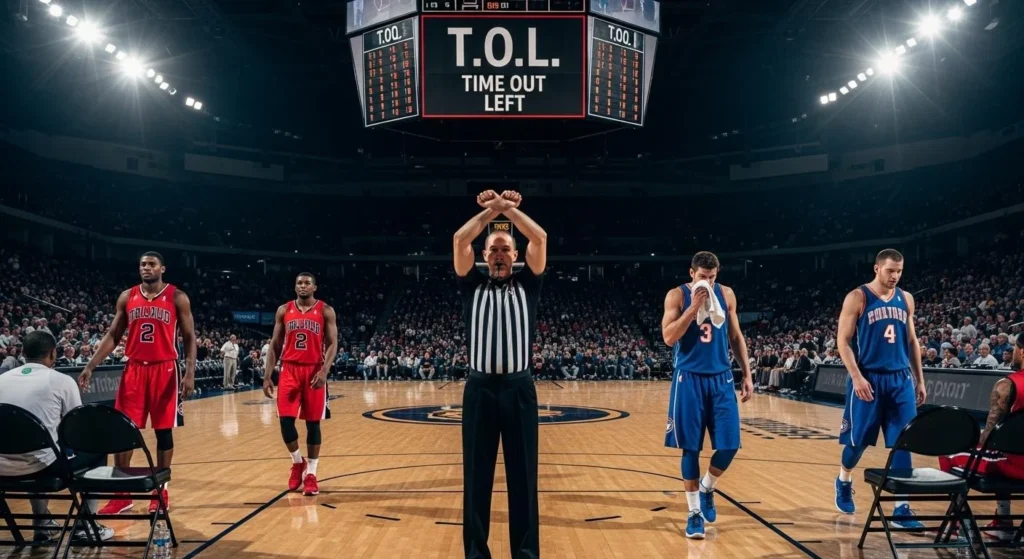
In basketball, TOL stands for Turnovers Lost. It refers to the number of times a team or player loses possession of the ball to the opposing team due to mistakes such as bad passes, traveling, double dribbles, or offensive fouls.
If you watch basketball games, read box scores, or follow live stats, you may have seen the abbreviation TOL and wondered what it actually means.
Basketball uses many short stat terms, and TOL is one of those that looks confusing at first. Understanding what TOL means helps you better analyze games, player performance, and team efficiency.
What Does TOL Mean in Basketball?
TOL means Turnovers Lost.
It tracks how many possessions a team or player gives away to the opponent without taking a shot.
Every time a team commits a turnover, it adds to their TOL count.
Full Form of TOL Explained
The full form of TOL is:
Turnovers Lost
This stat focuses on mistakes that result in losing ball possession.
Why Turnovers Matter in Basketball
Turnovers directly affect scoring chances.
When a team loses possession, they lose the opportunity to score and often give the opponent a fast break.
Lower TOL usually means better control of the game.
How TOL Is Recorded During a Game
Stat keepers record a TOL whenever a team commits a turnover.
This includes:
Bad passes
Traveling violations
Offensive fouls
Shot clock violations
Double dribbles
Each one adds to the total TOL.
Difference Between TOL and TO
Sometimes you may see TO instead of TOL.
TO usually means Turnovers in general.
TOL specifically emphasizes turnovers committed by the team being analyzed.
Team TOL vs Player TOL
TOL can be tracked for both teams and individual players.
Team TOL shows how careless or disciplined a team played.
Player TOL shows which players struggled with ball control.
Common Situations That Increase TOL
Certain situations often lead to higher TOL:
Defensive pressure
Fast paced offense
Poor communication
Inexperience
Forced passes
Good teams work to minimize these mistakes.
TOL in Box Scores and Stat Sheets
In box scores, TOL appears alongside other stats like points, rebounds, and assists.
It is a key indicator of efficiency.
TOL in Professional Basketball Leagues
TOL is used in:
NBA
College basketball
International leagues
Coaches and analysts rely on it heavily.
TOL in Youth and Amateur Basketball
Even at lower levels, TOL is tracked to teach discipline.
Reducing turnovers is a major coaching focus.
Why Coaches Focus on Reducing TOL
Coaches often say games are won or lost on turnovers.
Lower TOL means:
More scoring chances
Better control of tempo
Less defensive pressure
Relationship Between TOL and Game Outcomes
Teams with fewer turnovers often win.
High TOL usually leads to:
Lost momentum
Opponent fast breaks
Lower scoring efficiency
TOL and Ball Handling Skills
Strong ball handlers usually have lower TOL.
Guards are especially judged by their turnover numbers.
TOL Compared to Assists
Assists show positive playmaking.
TOL shows mistakes.
Good players balance high assists with low TOL.
How Defense Forces High TOL
Aggressive defense can force turnovers through:
Steals
Traps
Press defense
Shot clock pressure
This raises the opponent’s TOL.
TOL in Close Games
In close games, turnovers are critical.
One extra TOL in the final minutes can change the outcome.
Average TOL in a Basketball Game
Professional teams average around:
12 to 16 turnovers per game
Elite teams often stay below this range.
TOL and Pace of Play
Fast paced teams usually have higher TOL.
Slower paced teams focus on ball security.
How Players Can Reduce Their TOL
Players reduce TOL by:
Making smarter passes
Improving dribbling
Reading defenses better
Staying calm under pressure
TOL as a Coaching Evaluation Tool
Coaches use TOL to evaluate:
Decision making
Discipline
Game awareness
It is one of the most important teaching stats.
Context Comparison Table
| Context | Meaning of TOL | Why It Matters |
|---|---|---|
| Box score | Turnovers lost | Shows mistakes |
| Team stats | Possessions lost | Efficiency indicator |
| Player stats | Individual errors | Skill evaluation |
| Coaching review | Ball control issues | Improvement focus |
Meaning Table for TOL in Basketball
| Aspect | Meaning | Impact |
|---|---|---|
| Stat type | Turnovers | Lost possession |
| Team effect | Fewer shots | Lower scoring |
| Player effect | Mistakes | Reduced trust |
| Game result | Momentum shift | Can decide wins |
Related Basketball Terms Compared to TOL
| Term | Meaning | Difference |
|---|---|---|
| TOL | Turnovers lost | Focus on mistakes |
| TO | Turnovers | General term |
| STL | Steals | Defensive action |
| AST | Assists | Positive playmaking |
Common Misunderstandings About TOL
Some people think TOL includes missed shots.
It does not.
Only lost possessions without a shot count as TOL.
FAQs
What does TOL stand for in basketball?
TOL stands for Turnovers Lost.
Is TOL the same as TO?
They are related, but TOL emphasizes lost possessions.
Does a missed shot count as TOL?
No, only turnovers count.
Why is TOL important in basketball stats?
It shows ball control and efficiency.
Who usually has the highest TOL?
Primary ball handlers often have more turnovers.
Can defense increase opponent TOL?
Yes, strong defense forces mistakes.
Is low TOL always good?
Generally yes, it means better decision making.
Do coaches track TOL closely?
Yes, it is a key performance metric.
Conclusion
In basketball, TOL means Turnovers Lost and represents how many times a team or player gives away possession through mistakes. It is one of the most important stats for understanding efficiency, discipline, and game control.
Teams that protect the ball and keep their TOL low usually perform better and win more games. Knowing what TOL means helps fans read box scores smarter and appreciate the details that decide basketball games.
See Also More :
- What Does Orientation Mean in Math? Complete Meaning With Examples for 2026
- What Does UCS Mean in LEGO? Complete Meaning, Usage, and Examples for 2026

My name is Ava Mitchell. I work on TextSOrbit.com, where I create informative, well-researched, and SEO friendly content. I focus on writing clear and engaging articles that help readers understand topics easily while improving search visibility